Hand-Pollinating Potted Passionflower on a Balcony for Fruit
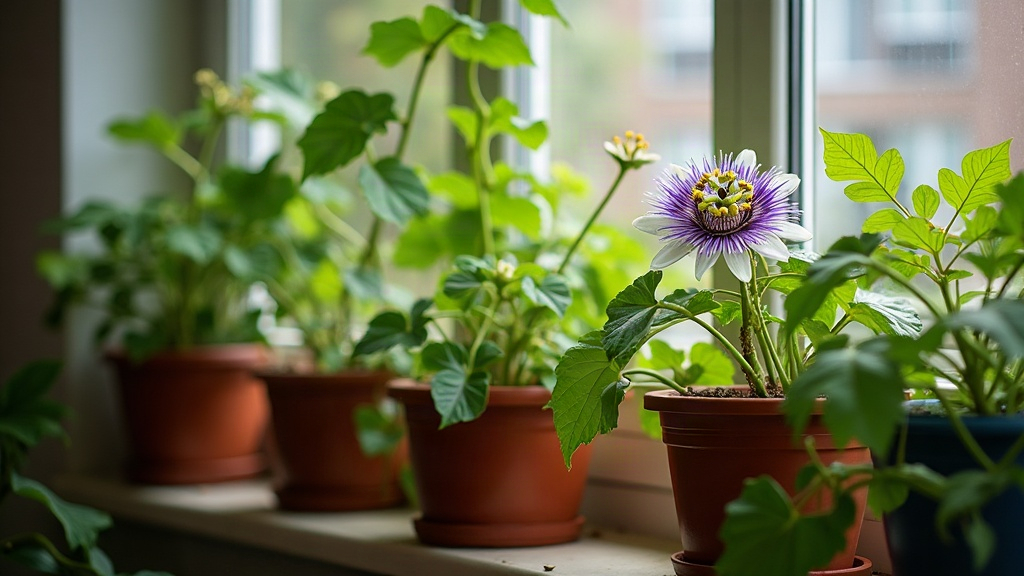
If your potted passionflower vine on an enclosed balcony keeps throwing out gorgeous blooms but never sets fruit, the culprit is almost never the plant. It’s pollination. Enclosed balconies shut out the bees, carpenter bees, and wind currents that normally shuttle pollen from blossom to blossom, which means someone has to take over that job manually. You. The good news is that hand-pollinating passionflower is dead simple, takes maybe 30 seconds per flower, and can flip a purely decorative vine into one that actually gives you fruit.
Why Enclosed Balconies Stop Fruit Set
Passionflowers (Passiflora edulis and related species) lean heavily on large pollinators, carpenter bees especially, to move pollen from the flower’s anthers over to its sticky, three-lobed stigma. Screened porches, glassed-in balconies, windy high-rise units: all of these keep the right insects out entirely. Even flowers that catch a bit of airflow rarely self-pollinate on their own, mostly because many passionflower varieties are only partially self-fertile, and the stigma lobes often curl away from the anthers on that same flower, physically blocking self-contact.
What You’ll Need
- A small, soft artist’s brush, a cotton swab, or honestly just a clean fingertip
- A magnifying glass (optional, but it helps you actually see the pollen)
- A notebook or your phone, to log which flowers you’ve treated and when
- Patience. Timing matters more here than technique ever will.
Step-by-Step: How to Hand-Pollinate Passionflower
1. Identify Flower Parts
Each bloom has a two-tier central structure:
- Anthers (lower tier, five yellow pollen-bearing structures) hang below the flower.
- Stigma (upper tier, three green or yellow lobes) sit above the anthers, often curved out of reach.
2. Time It Right
Passionflowers usually open in the morning, and pollen stays viable for only a few hours, typically between 9 a.m. and 1 p.m. depending on temperature. Once buds start opening fully, check daily, because the window shuts fast and most flowers only last a single day.
3. Collect Pollen
Brush the swab or bristle tip gently across the anthers. A fine yellow dust should cling to it, and that’s your viable pollen. On muggy days the pollen might look clumped or slightly waxy rather than powdery; that’s still fine to use, as long as it isn’t shriveled or dry and brown.
4. Transfer to the Stigma
Touch the loaded swab to all three stigma lobes, either on the same flower (self-pollination) or, better yet, on a flower from a genetically different plant (cross-pollination). Cross-pollinating tends to produce heavier fruit set and bigger fruit. Only have one vine? Don’t stress too much. Plenty of Passiflora edulis cultivars will still set fruit from self-pollination, just at a lower success rate.
5. Repeat Across Multiple Flowers
Work through every open flower you can reach. Not every attempt takes, so treating somewhere around 5 to 10 flowers a week during bloom season meaningfully raises your odds of landing even a handful of fruits.
Signs Pollination Worked
Within 3 to 5 days, a flower that’s been successfully pollinated will show its ovary (that small bulge tucked behind the petals) starting to swell. Flowers that didn’t take simply wilt and drop off cleanly within a day or two, no swelling, nothing.
Troubleshooting Common Problems
- No pollen visible on anthers: The flower likely opened too early or too late in the day. Try checking hourly during peak bloom to catch the right moment.
- Fruit starts then shrivels: This is usually a watering or nutrient problem, not a pollination failure. Potted vines need steady moisture and a monthly dose of potassium-rich feed while fruiting.
- Lots of flowers, no fruit at all: If you’ve only got one plant, try cross-pollinating between two separate vines instead. Genetic diversity gives fruit set a real boost in many passionflower species.
Extra Tips for Container-Grown Vines
- Keep humidity in a moderate range; a very dry enclosed balcony can dry out pollen before you even get it onto the stigma.
- Prune lightly after each fruiting flush to push out new flowering wood, since passionflowers fruit on new growth, not old.
- If your balcony gets even partial airflow, cracking a window or door during peak bloom hours can occasionally let a stray pollinator in to supplement your hand-pollination work.
Conclusion
Hand-pollinating a potted passionflower vine is a small, almost ritual task, but on an enclosed balcony where no bee is ever going to show up, it makes all the difference. Learn to spot open flowers at the right hour, move pollen carefully between anthers and stigma, and jot down which blooms you’ve already treated. Do that consistently, and you can turn a vine that’s purely decorative into one producing real, homegrown passion fruit, even several stories up from street level.