Growing Heat-Tolerant Malabar Spinach on a Balcony Railing
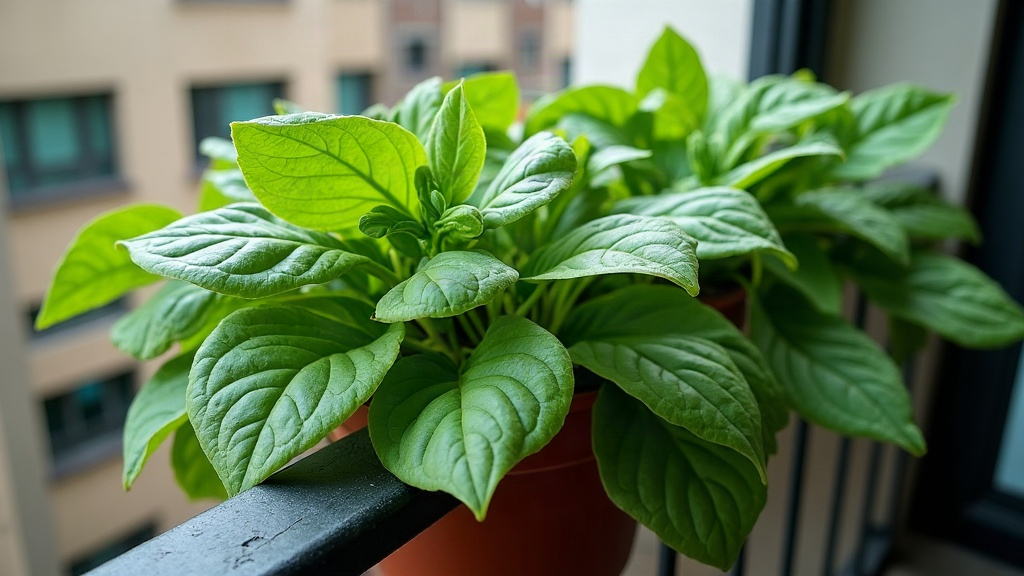
When Lettuce Gives Up, This Vine Just Keeps Climbing
Summer heat wilts lettuce. Regular spinach bolts in days, sometimes less. Malabar spinach (Basella alba or Basella rubra) doesn’t care. This glossy-leaved vine actually picks up speed in the exact conditions that wipe out most cool-season greens: blazing sun, thick humidity, temperatures sitting above 85°F. Train it up a balcony railing and you get two things at once, a living privacy curtain and a steady supply of mild, spinach-like leaves right through August. Here’s how to get it going in containers.
Why Malabar Spinach Is Perfect for Balconies
Here’s the odd part: Malabar spinach isn’t actually a spinach. It’s a tropical succulent vine, and that’s exactly why it handles heat so well and why its leaves have that thick, slightly mucilaginous texture (think okra, but milder). A few reasons it earns a spot on a hot railing:
- Loves heat and sun — it thrives where other greens quit, which makes it a natural fit for south- or west-facing balconies.
- Fast, dense growth — a single plant can climb past 10 feet in one season, filling in gaps fast.
- Ornamental appeal — the red-stemmed variety (B. rubra) brings deep burgundy vines and flowers with a pink blush, so it doubles as decoration.
- Continuous harvest — cut the leaves and they’re back within days.
- Low pest pressure — the thick leaves aren’t appetizing to most of the usual container pests.
Setting Up the Railing Trellis System
This is a twining vine, not a clinger. It wraps itself around whatever support you give it rather than grabbing on with tendrils. To turn a railing into its climbing structure:
- Anchor a deep container at the base of the railing. Go at least 12 inches wide and deep. The root system gets substantial once the plant is established.
- Install vertical supports. Bamboo stakes, jute twine, or a section of cattle panel zip-tied to the railing all work fine. Space your strings or stakes 6-8 inches apart if you want full coverage, not just a few scraggly vines.
- Guide the first growth yourself. Young shoots won’t find the railing bars or twine on their own at first. Wrap them gently by hand a couple of times a week until they catch and start climbing unassisted.
- Space plants 12-18 inches apart along the railing. Do that and you’ll have a thick green screen within 6-8 weeks of consistently warm weather.
Planting and Soil Requirements
- Container size: 5 gallons minimum per plant. Bigger pots mean you’re not watering twice a day in July.
- Soil mix: A well-draining potting mix with compost worked in. This plant eats a lot, so don’t skimp here.
- Starting method: Soak seeds for 24 hours before direct-sowing (the seed coat is tough and slows germination otherwise), or just buy nursery starts and transplant once nighttime temperatures hold above 60°F.
- Fertilizing: Feed every 2-3 weeks with a balanced liquid fertilizer or diluted fish emulsion. Skip this and growth stalls noticeably.
Watering and Care
Soil in a pot dries out far faster than soil in the ground, and for Malabar spinach, water is the single biggest factor separating tender, pleasant leaves from tough, stringy ones.
- Water deeply once the top inch of soil feels dry. In peak summer, that often means daily.
- Lay down straw or bark mulch on the soil surface to cut down on evaporation.
- Pinch the growing tips regularly. This pushes the plant to branch out and get bushy instead of racing up as one long, thin runner.
Harvesting for Continuous Privacy and Food
Once the vines hit about 2 feet, start cutting.
- Go for young leaves and tender shoot tips. The older leaves turn tougher and noticeably more mucilaginous.
- Don’t take more than a third of the plant at once. Strip it too hard and the screen thins out along with your harvest.
- Light, regular harvesting actually works in your favor here. It pushes branching, so the privacy screen gets denser the more you pick.
- Toss the leaves into stir-fries, soups, or a quick sauté like you would with regular spinach. They’ll work raw in a salad too, just know the bite is chunkier and more substantial than true spinach.
Common Problems and Fixes
- Slow early growth: Nothing’s wrong. Malabar spinach needs sustained heat above 70°F to really get moving, and it will, once summer settles in for good.
- Yellowing leaves: Usually points to a nitrogen shortage. Bump up your feeding schedule.
- Leggy, sparse vines: Pinch the tips harder and more often, and check that the plant’s getting at least 6 hours of direct sun. Less than that and it stretches thin looking for light.
- Overwintering: This is a tender perennial, hardy only in USDA zone 10 and up. Everywhere else, treat it as an annual, or snip cuttings in fall and root them indoors to get a head start next spring.
Conclusion
A sun-blasted, exposed railing is a problem for most plants. For Malabar spinach it’s basically an invitation. It turns that same exposed spot into a shaded, private little corner and a genuinely productive food source, performing best at exactly the moment when most leafy greens are throwing in the towel. Give it a sturdy trellis, deep pots, and water it like you mean it, and within a few weeks you’ll have a lush green, or deep burgundy, curtain climbing your railing, with fresh leaves ready to cut all summer long.