Direct Sowing vs Transplanting Dill in Deep Apartment Containers
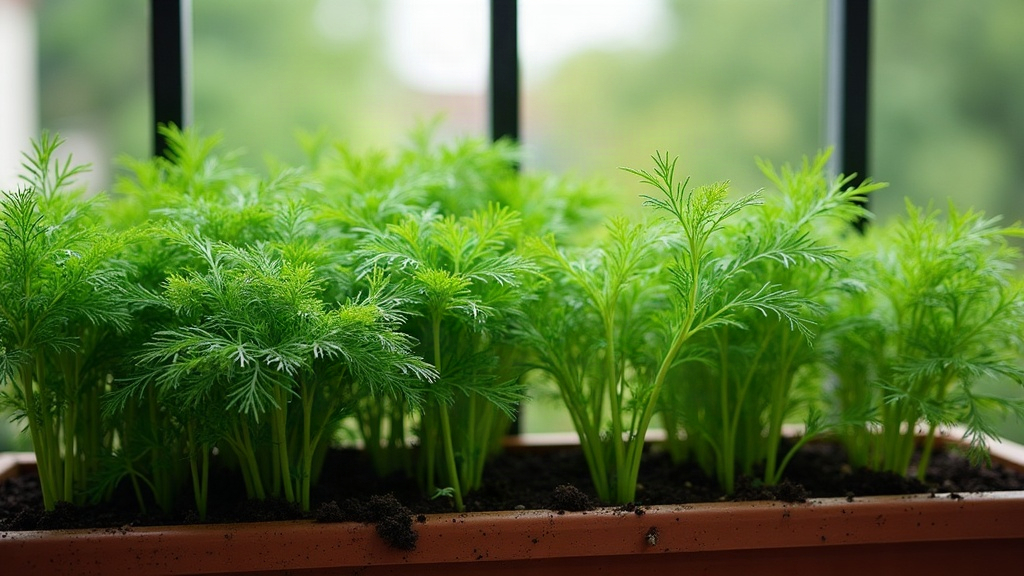
If you’ve ever transplanted dill and watched it sulk, turn yellow, or bolt within days, you already know the taproot problem firsthand. For taprooted herbs like dill, direct sowing into deep apartment containers almost always beats transplanting, simply because these plants grow one dominant root that hates being disturbed. Here’s why that happens, and a practical system for growing dill that actually thrives on a balcony, windowsill, or small patio, even when space is tight.
Why Taproots Change the Rules
Most leafy herbs, basil, mint, parsley to some extent, grow fibrous, branching roots. You can slice them apart, repot them, and they’ll bounce back within a week without complaint. Dill is built differently. So are cilantro, carrots, and fennel. They send down one central taproot that anchors the plant and stores its energy reserves.
When you transplant a taprooted seedling, a few things happen in sequence:
- The taproot tip gets damaged, almost without exception, even when you’re careful about it.
- The plant stops putting energy into leaves and starts pouring it into repairing or regrowing that root.
- Stress signals from root damage and transplant shock convince the plant it’s in danger, which triggers premature bolting, that sudden, unwanted sprint toward flowering and seed production.
- Once dill bolts, leaf growth slows to a crawl and whatever leaves remain taste noticeably bitter.
This is exactly why you rarely see dill sold in six-packs the way tomatoes or peppers are. At scale, it just doesn’t transplant well. Growers know it, and they’ve adjusted their offerings accordingly.
The Case for Direct Sowing
Direct sowing means putting seeds straight into their final container and skipping the seed-tray phase altogether. For anyone growing in an apartment, this brings three real advantages:
- Zero root disturbance. The taproot heads straight down, undisturbed, from the very first day.
- A simpler process overall. No hardening off, no managing transplant shock, no narrow timing window you have to hit just right.
- Stronger plants that bolt later. Dill left undisturbed matures on a predictable schedule and resists the stress-triggered flowering that cuts harvests short.
How to Direct Sow Dill in a Container
- Pick a container at least 10 to 12 inches (25 to 30 cm) deep. Dill’s taproot wants to stretch well past what a shallow herb pot allows. Cram it into something too shallow, and the root curls on itself, which stresses the plant in almost the same way transplanting does.
- Use a well-draining potting mix, not soil dug from the garden. Container growing on an apartment balcony demands a mix that won’t compact into a brick or stay waterlogged for days.
- Sow seeds a ¼ inch (0.6 cm) deep, spacing them 6 to 8 inches apart if you’re sharing a wide container, or scatter them and thin later.
- Keep the soil consistently moist, not soaked, until germination shows up, which usually takes 10 to 21 days. Yes, it can feel slow. Be patient.
- Thin seedlings instead of moving them. Snip the extras off at soil level with scissors rather than pulling or trying to replant them elsewhere.
When Transplanting Can Still Work
Transplanting isn’t off the table entirely, it’s just riskier and needs more care than most people assume. It can make sense when:
- You’re starting seeds indoors in late winter to get a jump before balcony temperatures cooperate.
- You’re using biodegradable or soil-block pots that go into the container whole, so the roots never get physically touched.
- You’re fine accepting a higher failure or bolt rate because you’re experimenting, not chasing a guaranteed harvest.
If you do transplant, stick to peat or coir pots, move seedlings when they’re very young (2 to 3 true leaves), and drop the entire pot into the container without breaking it apart. Tear it open and you’ve basically undone the whole point.
Choosing the Right Deep Container for Apartments
With dill specifically, depth matters a lot more than width:
- 10 inches deep, minimum, for casual home use.
- 12 to 16 inches deep if you want dill to reach its full height. It can grow 2 to 3 feet tall, and it needs the root depth underneath to actually support that.
- Drainage holes aren’t optional. Dill’s taproot rots fast in standing water, sometimes within days of a soggy spell.
- Dark plastic pots or fabric grow bags work well on balconies since they drain quickly and are light enough to drag around when you’re chasing sun.
Common Mistakes Apartment Growers Make
- Using herb pots under 6 inches deep. This almost guarantees a stunted plant that bolts early.
- Transplanting seedlings bought in a nursery six-pack. Most garden-center dill arrives already root-stressed before it ever reaches your balcony.
- Overcrowding. Dill wants airflow around its stems. Crowd it into a small container and it bolts faster, plus it’s more prone to fungal problems.
- Watering on and off instead of on a schedule. Drought stress ranks right behind root disturbance as a bolting trigger, and it’s one of the easiest mistakes to make without noticing.
Conclusion
For a taprooted herb like dill, direct sowing into a deep container beats transplanting, pretty much every time. It sidesteps the root disturbance that sets off stress bolting, keeps your routine simple, and gives you sturdier plants you can harvest from for longer, exactly what you want in the tight, controlled space of an apartment garden. Save the transplanting for herbs with forgiving, fibrous roots, and let dill grow right where it’s meant to live, from seed all the way to harvest.