Diatomaceous Earth vs Yellow Sticky Traps for Fungus Gnats
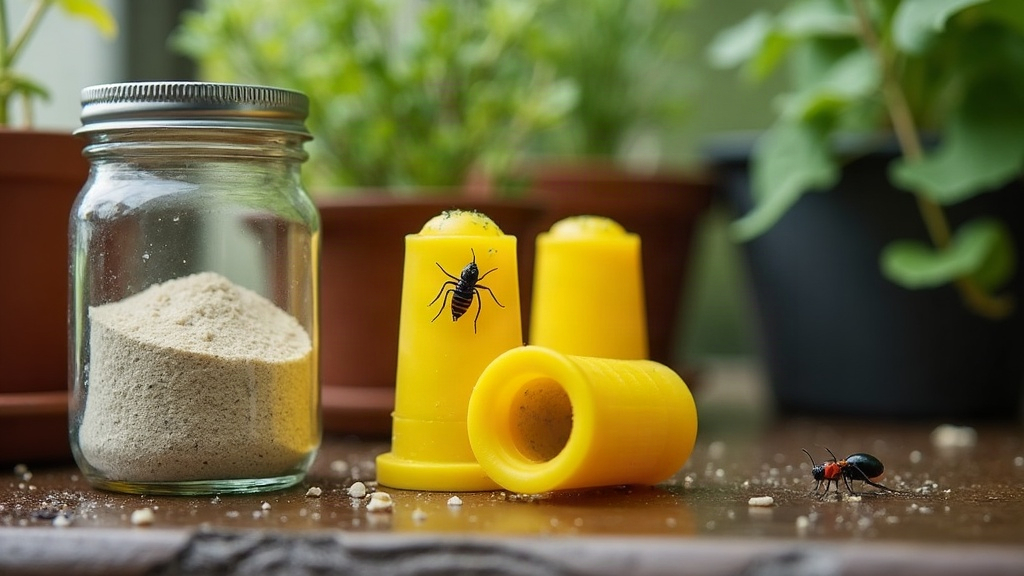
If your balcony pots are hosting tiny black flies that scatter the second you water, you’re dealing with fungus gnats. The two go-to DIY fixes are diatomaceous earth (DE) and yellow sticky traps, and they tackle the problem from completely different directions. DE kills larvae down in the soil. Sticky traps catch the adults buzzing around in the air. One treats the cause, the other treats the symptom. Figure out that distinction and you’re already halfway to winning this fight.
Why Damp Balcony Pots Attract Fungus Gnats
Fungus gnats (Bradysia species) love soil that stays consistently moist and loaded with organic matter. Balcony pots practically roll out the welcome mat for them, and here’s why:
- Decorative outdoor containers often have mediocre drainage to begin with
- Rain piles on top of your regular watering, so the top 2-3 inches of soil never really dries out
- Organic potting mix and decaying root hairs give larvae plenty to eat
- Warm, humid pockets near walls or railings speed up the gnat life cycle, sometimes to just 3-4 weeks from egg to adult
The adults themselves won’t touch your plants. It’s the larvae you need to worry about, since they chew on fine roots and fungal matter in the soil, which can stunt seedlings and push already-stressed plants further downhill.
How Diatomaceous Earth Works
Diatomaceous earth is a fine powder ground from fossilized algae. Zoom in under a microscope and you’ll see sharp, jagged edges. It doesn’t poison anything, it just works mechanically:
- It strips away the waxy coating on larvae and insects, so they dehydrate
- It forms an abrasive layer on the soil surface that larvae and emerging adults have to physically cross
How to use it:
- Wait until the top layer of soil is bone dry before you apply anything.
- Dust a thin, even layer of food-grade DE across the soil surface.
- Reapply after rain or a heavy watering session, because wet DE basically stops working.
Pros:
- Hits larvae right at the source, cutting down the next generation
- Safe around humans, pets, and beneficial bugs as long as it stays dry
- Cheap, and it lasts a long time in dry conditions
Cons:
- Dead weight once it gets wet, which is a real problem on a rainy balcony
- Won’t touch the adult gnats already flying around
- Needs constant reapplication outdoors, which gets tedious fast
How Yellow Sticky Traps Work
Adult fungus gnats can’t resist the color yellow. Hang a sticky card nearby and they fly straight into it. This does two things:
- Cuts the breeding population by catching females before they lay eggs
- Gives you a rough gauge of how bad the infestation is (just count the gnats on the card weekly)
How to use it:
- Stick traps vertically into the soil, or hang them just above the pot rim.
- One trap per medium pot is usually enough; go bigger planters, add more traps.
- Swap traps out every 1-2 weeks, or sooner if they’re already covered.
Pros:
- Works instantly, no matter how wet the soil is
- Doubles as a simple monitoring tool so you can track whether things are improving
- Weatherproof versions exist for outdoor balcony use
Cons:
- Does nothing for the larvae still growing in the soil
- Can accidentally catch beneficial insects, including small pollinators
- Needs regular replacing, especially if it’s windy or rainy out
Which One Actually Eradicates Fungus Gnats Faster?
Honestly? Neither one on its own fixes a damp balcony infestation. Here’s the breakdown:
| Factor | Diatomaceous Earth | Yellow Sticky Traps |
|---|---|---|
| Targets larvae | Yes | No |
| Targets adults | No | Yes |
| Works when soil is wet | No | Yes |
| Speed of visible results | Slow (1-2 weeks) | Fast (days) |
| Outdoor durability | Low (washes away) | Moderate (weatherproof options exist) |
| Maintenance effort | High | Medium |
The Combined Strategy That Actually Works
For damp balcony pots, the real fix is combining both methods with better watering habits:
- Fix drainage first. Add a layer of gravel at the base of the pot and prop it up slightly so excess water can actually escape.
- Let the top 1-2 inches of soil dry out between waterings. Fungus gnat larvae simply can’t survive in dry soil, period.
- Apply DE once the surface is dry, and reapply after any rain.
- Set out yellow sticky traps around your pots to catch adults and keep tabs on progress week by week.
- Keep this up for 3-4 weeks to break the breeding cycle completely.
Conclusion
Diatomaceous earth and yellow sticky traps each solve half the puzzle. DE kills larvae in the soil, but it’s useless the moment things get damp. Sticky traps grab the flying adults, but they ignore what’s happening underground. On a balcony, where rain and overwatering make soil moisture nearly impossible to control, the fastest and most lasting results come from using both tools together, paired with better drainage and smarter watering. Fix the environment, not just the bugs, and the gnats will stop coming back.