Why Container Carrots Fork and Grow Hairy Roots in Heavy Mix
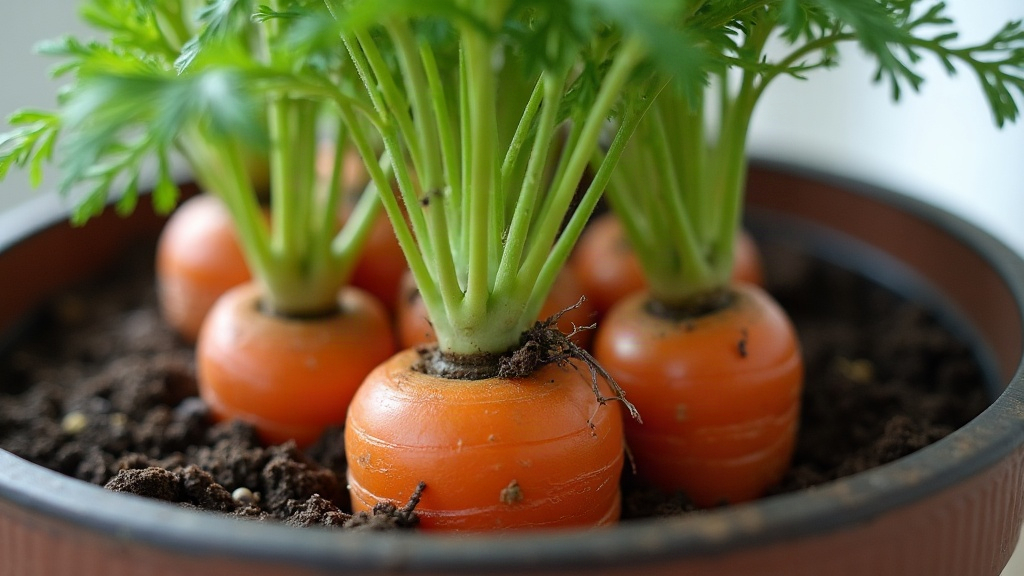
If your container-grown baby carrots are coming out forked, twisted, or dragging along fuzzy little root hairs, don’t blame the seed packet. The real culprit is almost always what’s sitting in the pot. Heavy, compacted, or overly rich balcony soil blocks the taproot’s straight downward push and triggers stress responses that lead to forking and excess root hair growth. Here’s exactly why that happens, and how to fix it before your next sowing.
Why Heavy Potting Mix Causes Forking
Carrots are taproot vegetables. They want loose, uniform, stone-free soil so they can send down one clean root instead of wrestling their way through obstacles. When the mix is heavy (dense with compost, clay-like garden soil, or compacted peat), a handful of things start going wrong at once:
- Physical resistance: The taproot tip runs into a compacted clump and splits into two or more forks, each one hunting for the path of least resistance.
- Uneven density: Bagged “topsoil” or garden soil dumped into containers often has pockets of hard and soft material sitting side by side. Carrots fork exactly where they meet that resistance.
- Poor drainage compaction: Heavy mix holds onto water, then bakes into a hard crust, especially in small balcony pots that dry out unevenly from the edges inward.
- Fresh manure or unfinished compost: A hit of high nitrogen combined with undecomposed organic matter makes roots branch out and “grow legs” instead of committing to one straight taproot.
Why Roots Turn Hairy
Hairy, fuzzy secondary roots (not to be confused with the microscopic root hairs every plant has) are basically a distress flare:
- Compaction stress: When the main root can’t force its way through dense soil, the plant hedges its bets by sending out lateral roots to hunt for water and nutrients elsewhere.
- Overwatering in heavy mix: Waterlogged soil starves roots of oxygen. The plant responds with shallow, hairy growth near the surface instead of pushing a deep taproot down.
- Excess nitrogen: Rich mixes loaded with compost or slow-release fertilizer favor leafy top growth and encourage a mess of lateral rootlets rather than one clean taproot.
- Root disturbance from transplanting: Carrots despise being moved. Snap the taproot tip even slightly during transplanting, and it regrows as several hairy branches instead of a single root.
The Fix: Getting Straight, Smooth Carrots in Containers
1. Use a Truly Loose Mix
Blend:
- 40% coarse perlite or sharp sand
- 40% coir or fine peat-free compost
- 20% well-aged, sieved compost (no clumps, no fresh manure)
Run everything through a ¼-inch mesh sieve before filling your containers. Pulling out stones, twigs, and clumps isn’t optional if you want straight carrots. It’s the single biggest thing you can do.
2. Choose Deep, Narrow Containers
Even baby carrot varieties like ‘Adelaide’ or ‘Amsterdam Forcing’ still need 8 to 10 inches of loose depth to work with. Skimp on depth, and roots hit the container bottom and fork right there.
3. Avoid Overwatering
Water deeply, then leave it alone. Let the top inch of soil dry out before the next watering. A steady, moderate moisture level beats the soggy-then-bone-dry cycle that triggers hairy, stressed roots.
4. Skip Fresh Manure and Heavy Fertilizer
Feed lightly, and lean toward something low in nitrogen but higher in phosphorus and potassium, a 5-10-10 works well. Too much nitrogen just grows you a lush leafy top attached to a forked, hairy root.
5. Sow Direct, Thin Early
Never transplant carrot seedlings, full stop. Sow the seeds straight into their final container and thin to 2-3 inches apart once true leaves show up, so no two roots ever end up competing for the same patch of soil.
Quick Diagnostic Checklist
- Forked at the top only → you hit a compacted layer near the surface.
- Forked deep down → container’s too shallow, or the root hit the pot bottom.
- Hairy all over → overwatering or too much nitrogen.
- Hairy near the crown only → surface compaction combined with inconsistent watering.
Conclusion
Forked and hairy container carrots come down to soil texture and moisture, not seed quality. Switch to a sieved, loose, low-nitrogen mix, keep your watering consistent, and give the roots at least 8-10 inches of undisturbed depth to work with. Do that, and your next balcony harvest should come out smooth, straight, and properly sweet.