Curing Powdery Mildew on Potted Zinnias in Tight Corners
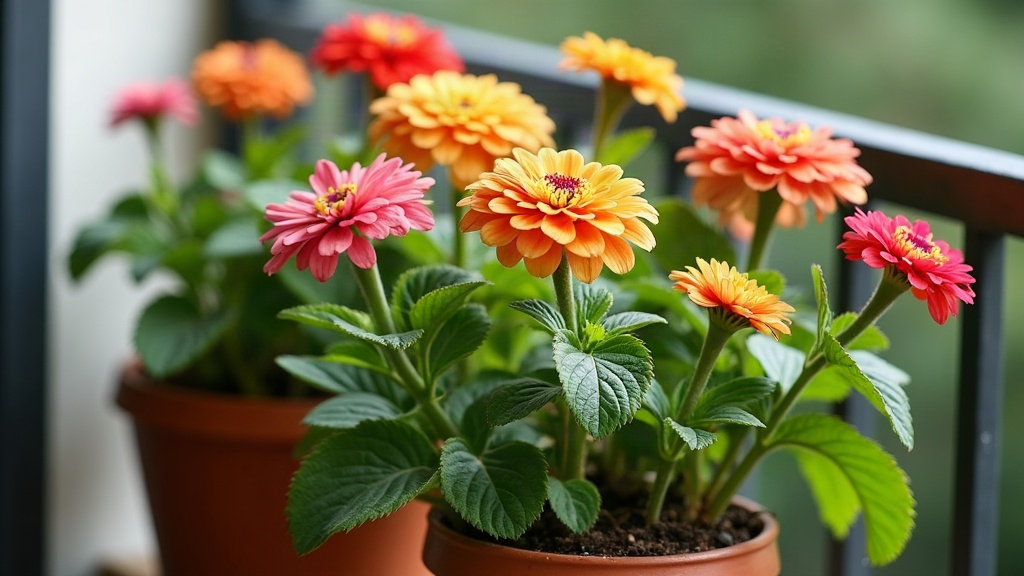
If your potted zinnias have that white, flour-dusted look on the leaves, you’re looking at powdery mildew. Nine times out of ten the real cause isn’t some rogue spore blown in from nowhere, it’s poor air circulation: pots wedged into tight corners, pushed against a wall, or crammed shoulder-to-shoulder with other containers. The good news is that this fungus is easy to beat once you fix the airflow and stick to a basic cleanup-and-spray routine. Here’s how.
Why Tight Corners Cause Powdery Mildew
Zinnias want sun and open space around their foliage. Stick a pot in a corner, say against a fence, wedged between a wall and a railing, or squeezed in next to three other containers, and a few things start happening at once:
- Stagnant, humid air pools around the leaves, especially overnight.
- Less sunlight reaches the foliage, so leaves stay damp longer after watering or morning dew.
- Leaf surfaces stay cooler and moister, which is exactly what powdery mildew fungus (usually Podosphaera or Erysiphe species) needs to germinate its spores.
Here’s the part people miss: this disease doesn’t need standing water to spread. High humidity plus still air is enough on its own. That’s why zinnias tucked into sheltered, low-airflow corners get hit so often, even when you’re watering them exactly right.
Signs You’re Dealing With Powdery Mildew (Not Something Else)
- White or grayish powdery spots, usually starting on the upper leaf surfaces near the base of the plant.
- Spots that spread and run together until entire leaves and stems are coated.
- Leaves curling, yellowing, or dropping early as things get worse.
- Distorted new growth, plus fewer and smaller blooms than usual.
One quick diagnostic trick: unlike downy mildew or bacterial leaf spot, powdery mildew actually rubs off like dust when you wipe a leaf between your fingers. If it smears off white, that’s your answer.
Step-by-Step Cure
1. Relocate the Pot Immediately
Move the container at least 12-18 inches away from walls, fences, or neighboring pots. No open spot available? Rotate the pot every few days and angle it so air hits the foliage from more than one direction instead of just one flat side.
2. Prune for Airflow
- Cut away the worst-infected leaves and stems with clean, sharp scissors. Bag them and throw them out, don’t toss them in the compost.
- Thin out the dense inner growth, even on parts of the plant that still look healthy, to open up the canopy.
- If you’ve got several zinnia stems crowded into one pot, space them so the leaves aren’t touching.
3. Water at the Base, Early in the Day
Switch to bottom watering, or at least aim the spout at the soil instead of the leaves. Overhead watering just wets the foliage and makes the humidity problem worse. Water in the morning, that way any leftover moisture burns off in the sun instead of sitting there all night inviting trouble.
4. Treat With a Fungicide Spray
Once you’ve pruned and relocated the pot, hit the remaining foliage with one of these:
- Potassium bicarbonate spray (store-bought, or mix your own: 1 tablespoon baking soda + 1/2 teaspoon mild liquid soap + 1 gallon water). It shifts the leaf surface pH just enough to stop spores from taking hold.
- Neem oil, applied in the evening so you don’t scorch the leaves. Bonus: it also keeps other pests off your plants.
- Sulfur-based fungicides for infections that have really taken hold. Follow the label closely, and don’t mix these with oil sprays within two weeks of each other, that combination can burn foliage badly.
Spray every 7-10 days until the new growth comes in clean, with no fresh powdery patches.
5. Improve Long-Term Pot Placement
- Prop pots up on a stand or even a couple of bricks so air can move underneath and around the container, not just over the top.
- Stuck with a tight corner as your only option? A small oscillating fan running a few hours a day works wonders in humid climates.
- Group zinnias with other sun-loving plants that tolerate airflow well, rather than lining them up against a solid wall or fence.
Preventing Recurrence
- Plant mildew-resistant varieties like ‘Profusion’ or ‘Zahara’ zinnias if you’re growing in containers. They shrug off conditions that would wreck other types.
- Skip the high-nitrogen fertilizer. It pushes soft, floppy new growth that mildew loves. A balanced bloom fertilizer is the better call.
- Rake up fallen leaves and debris around your pots weekly. Spores overwinter in that litter and reinfect plants come spring.
- Check your plants weekly during warm, humid, or cloudy stretches, that’s when mildew spreads fastest.
Final Thoughts
Powdery mildew on potted zinnias stuffed into tight corners isn’t some mystery illness, it’s a predictable outcome of trapped humidity and dead air. Move the pot away from walls, prune to open up the canopy, water at the soil line instead of overhead, and keep up a consistent fungicide schedule. Do that and you’ll usually have a clean, blooming plant again within two to three weeks, lasting the rest of the season.